
Takeout vs. Delivery: Pros, Cons, and Real Strategies for Today’s Restaurants

I used to watch drivers walk past waiting guests while fries wilted in boxes. I wasn’t a fan. Today, off-premises is part of a smart restaurant’s profit model—if you run it deliberately.
The New Reality: Off-Premises Isn’t Optional
Off-premises dining is now a core behavior. Technomic reports 51% of U.S. consumers view takeout and delivery as essential, with even higher adoption among Gen Z. The National Restaurant Association’s State of the Restaurant Industry confirms that digital ordering and off-premises occasions continue to drive sales across segments.
Winning isn’t about choosing takeout or delivery—it’s about matching each channel to your concept, guests, and operations.
Takeout vs. Delivery: Quick Comparison
Takeout (strong foundation)
Pros
- Higher margins (no commission fees)
- Full quality control from line to guest
- Faster handoff; fewer moving parts
- Lower staffing complexity off-peak
Cons
- Limited geographic reach
- Requires convenient access and parking
Delivery (market expansion)
Pros
- Access guests who won’t travel to you
- Larger average checks in many markets
- Fills shoulder periods; boosts visibility on apps
Cons
- 15–30% commissions erode margin
- Less control over temperature and presentation
- Added coordination and tech integration
- Brand experience depends on third parties
For market and margin dynamics, see McKinsey’s analysis of delivery platforms and economics: https://www.mckinsey.com/industries/technology-media-and-telecommunications/our-insights/ordering-in-the-rapid-evolution-of-food-delivery
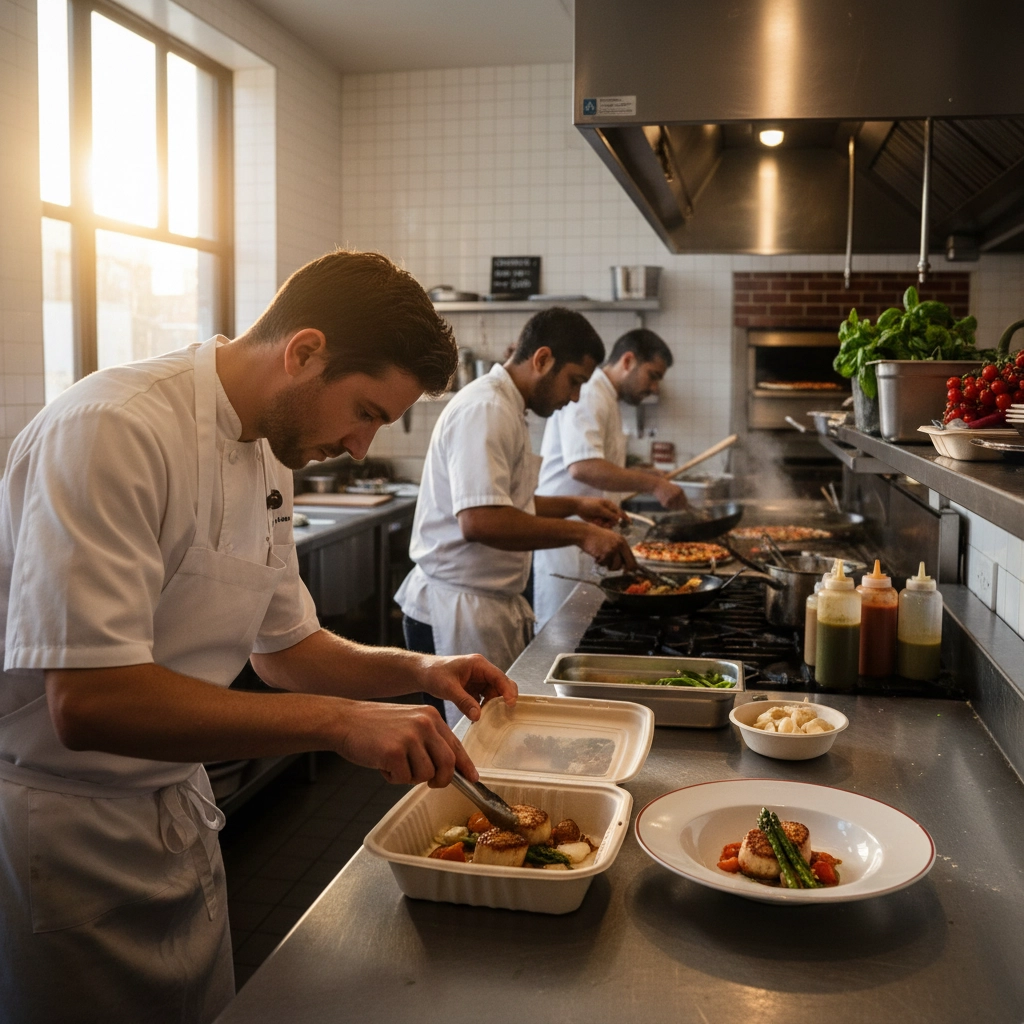
Non-Negotiables: Make It Work
- Menu engineering for travel: Create a tight off-premises menu. Cut items that get soggy, split sauces, and default to crispy/hold-well sides.
- Packaging and line flow: Spec packaging by item, set a hot/cold staging map, and design a to-go pass with QR/order screen visibility.
- Staffing and tech: Assign a to-go expediter, integrate tablets into your POS, and standardize order throttling rules.
Actionable Moves to Maximize Each Channel
Quick-service (fast food) consulting lens
- Drive mobile ordering and scheduled pickup to smooth peaks
- Use limited-time bundles that travel well to grow check size
- Add curbside slots and order-ready SMS to cut dwell time
- Consider in-house delivery only when volume density supports it
Full-service focus
- Prioritize takeout and curbside before leaning into broad delivery
- Offer a trimmed delivery menu with premium packaging
- Use direct ordering to own the guest relationship (loyalty, CRM)
- Stage a separate pickup counter to protect dine-in service
Decide Fast: Where to Start
Choose Takeout When
- Food quality and presentation define your brand
- Margins are tight and control matters
- You have easy access, parking, or curbside capacity
Choose Delivery When
- You target Gen Z/Millennial convenience
- Parking/foot traffic is limited
- You have off-peak kitchen capacity and travel-friendly items
Choose Both When
- Your team and line can run dual service cleanly
- Demand exists in both channels
- You can maintain standards and the added revenue justifies complexity
Bottom Line
Strategy beats quick fixes. Treat takeout and delivery as distinct service models with their own menus, flows, and metrics. If you need restaurant consulting to design or optimize off-premises—startup, turnaround, or growth—Salt & Cayenne will help you build systems that protect quality and expand profit.
Let’s tailor the right off-premises plan for your concept: https://saltandcayenne.com
Get More Info
or fill out this form and we’ll be in touch soon!