
The Place where Restaurant Operations should be efficient
Restaurant Operations should, usually, be all about efficiency. How can you get the most service or most food or most guests for the least amount of cost. However, there’s one area where the goal should not be efficiency.
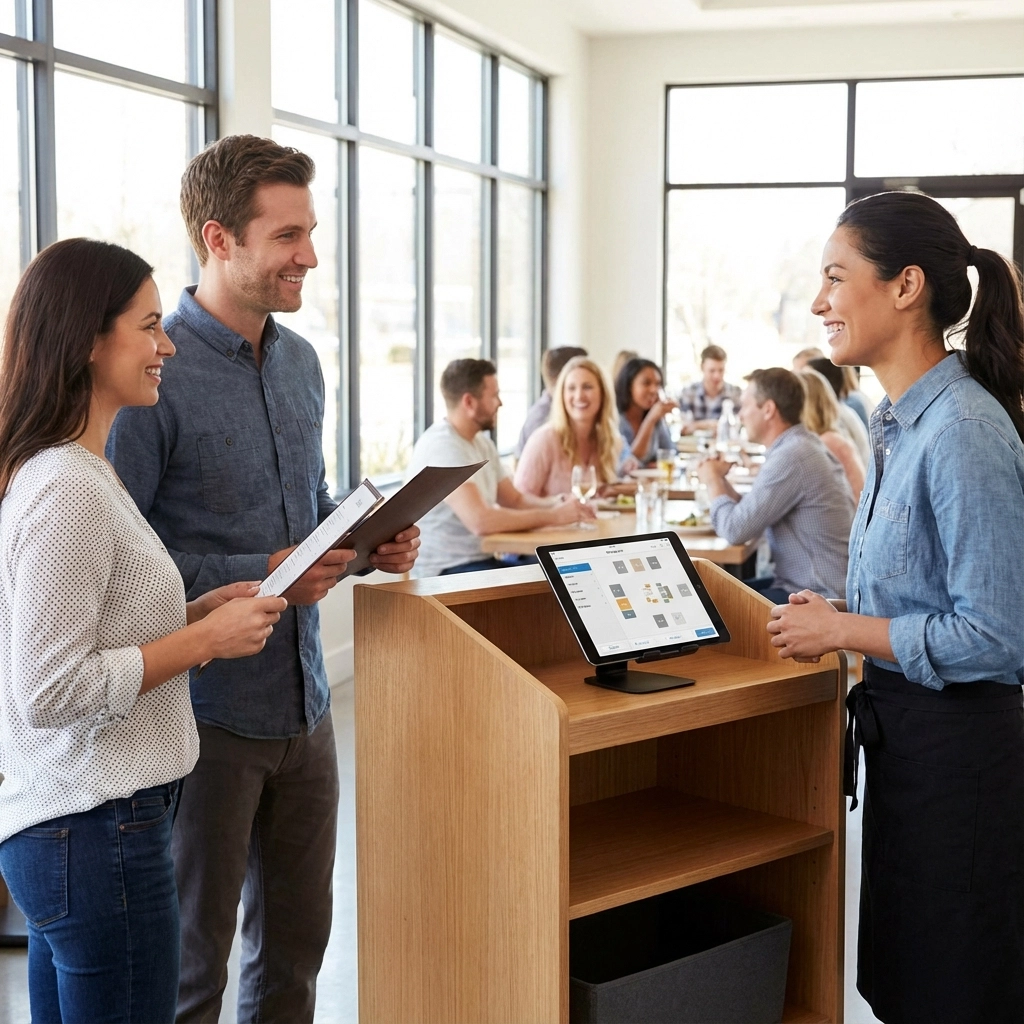
Walk into most restaurants during peak hours and you’ll witness the same scene: a host team frantically clearing tables, wiping them down in assembly-line fashion, and then seating every available table within minutes. It looks productive. It feels efficient. And it’s absolutely killing your guest experience.
This is where most restaurant consulting advice gets it backwards. Everyone’s obsessed with turning tables faster, but they’re missing the forest for the trees. The hostess stand isn’t a manufacturing line, it’s the conductor of your restaurant’s orchestra. And sometimes, the best conductors know when to slow the tempo.
The Batching Trap That’s Sabotaging Your Service
Here’s what happens in 90% of restaurants: your host team clears all empty tables, resets them simultaneously, then seats them all within a 10-minute window. On paper, this looks like peak efficiency. In reality, you’ve just created a service nightmare.
When you batch your seating like this, every table hits the same service milestones at exactly the same time. Your servers get slammed with initial greets. Your bartender gets crushed with drink orders. Your kitchen receives a tsunami of appetizer orders, followed by radio silence, then another wave of entrees.
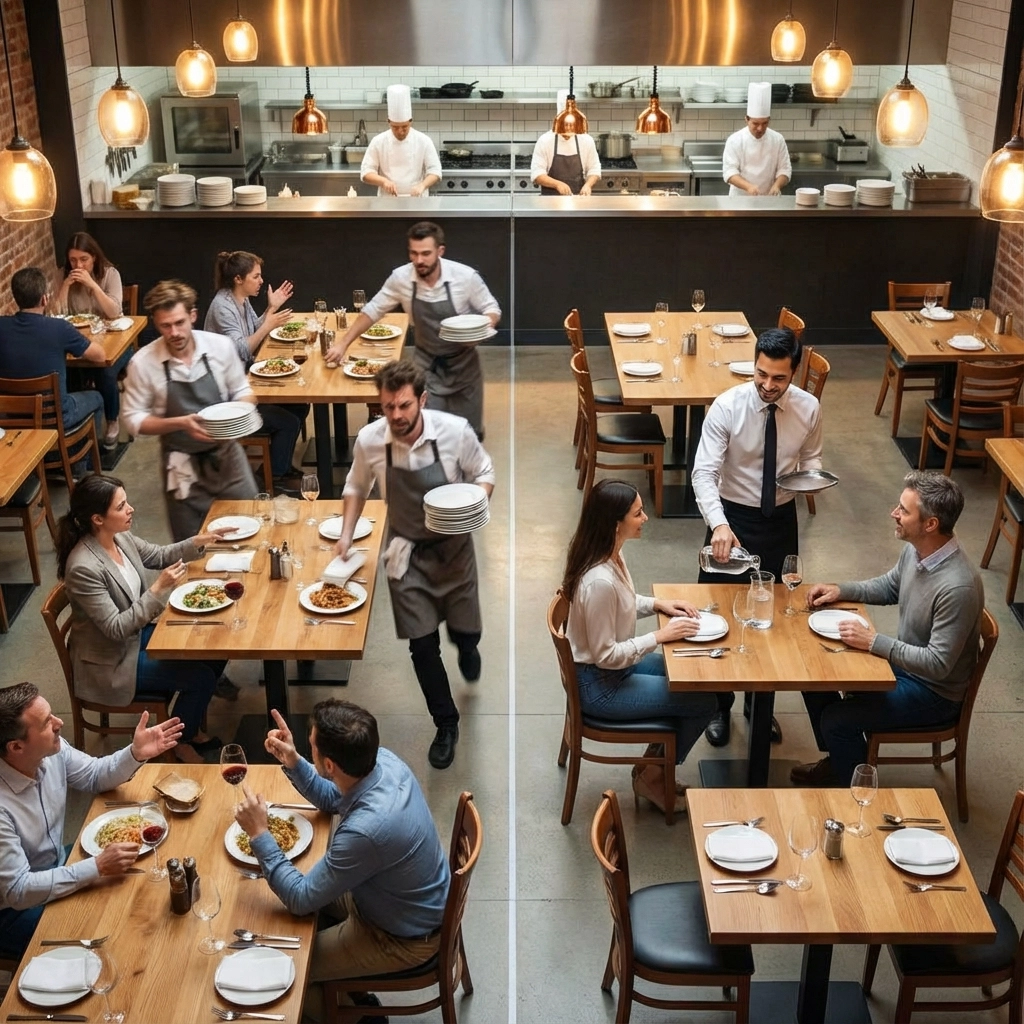
The result? Guests wait 15 minutes for their first cocktail instead of 3. Appetizers take 25 minutes instead of 8. Your servers look frazzled, your kitchen gets backed up, and what started as “efficient” table management becomes a cascading failure that affects every guest in your restaurant.
The Smart Inefficiency That Actually Works
The counterintuitive solution is deceptively simple: seat tables one at a time, in sequence. Bus one table, reset it completely, seat it, then move to the next. It takes longer to fill your dining room, but it creates a steady rhythm that your entire operation can handle.
When you stagger your seating by even 3-5 minutes per table, you create natural breathing room throughout your service flow. Servers can provide proper attention to each new table. Your kitchen can execute orders without getting buried. Bartenders can craft cocktails with care instead of panic.
Yes, your last table might wait an extra 10 minutes to be seated. But once they sit down, they’ll receive the kind of service that turns them into regulars. Which matters more: getting them in their chair quickly, or ensuring they have a remarkable experience once they’re there?
Why Guests Actually Prefer the Wait
This might sound backwards, but guests would rather wait a few extra minutes for a table than sit down immediately and then wait forever for service. The psychology is simple: when they’re waiting to be seated, they expect to wait. It’s part of the restaurant experience. They can see you’re busy, they understand the process, and they’re mentally prepared for it.
But once they’re seated at their table, their expectations shift completely. Now they expect prompt service, quick drink delivery, and attentive care. Every minute of delay feels magnified because they’re no longer “waiting to start”: they’ve started, and things should be moving.

The Hidden Costs of Batch Seating
Beyond the obvious service issues, batch seating creates hidden operational costs that most restaurant owners never calculate:
Increased Server Errors: When servers are rushed to handle multiple new tables simultaneously, mistakes multiply. Wrong orders, forgotten modifications, missed allergies: all of which cost you money and reputation.
Kitchen Inefficiency: Your cooks can’t maintain quality when they’re slammed with identical orders. Food sits under heat lamps, timing gets thrown off, and your food costs increase as items need to be remade.
Staff Burnout: Constantly cycling between dead periods and overwhelming rushes exhausts your team faster than consistent, manageable workflow.
Negative Reviews: Guests don’t complain about waiting for tables: they complain about poor service after being seated. Batch seating directly contributes to the service failures that generate bad reviews.
How to Implement Strategic Seating
The transition from batch seating to strategic flow requires retraining your host team’s instincts, but the mechanics are straightforward:
Create a Reset Rhythm: Instead of clearing all tables then resetting all tables, complete the full cycle for each table before moving to the next. Bus table 12, wipe it down, reset it completely, then seat the next party before moving to table 15.
Communicate with Your Kitchen: Your hosts need to understand how their decisions ripple through the restaurant. When they seat three four-tops simultaneously, they’re essentially ordering 12 appetizers and 12 entrees at once.
Train for Guest Communication: Your hosts should be able to explain brief delays confidently. “I have a perfect table coming available in about 5 minutes that’ll give you the best experience” sounds much better than “everything’s full.”
Monitor Service Flow: Watch your servers and kitchen during different seating patterns. You’ll quickly see the difference between strategic pacing and reactive chaos.
The Non-Negotiables for Host Station Success
Effective host station management goes beyond seating strategy. Your host team needs clear systems for cleanliness restaurant standards, reservation management, and guest communication. These operational foundations determine whether strategic seating actually improves your guest experience or just creates different problems.
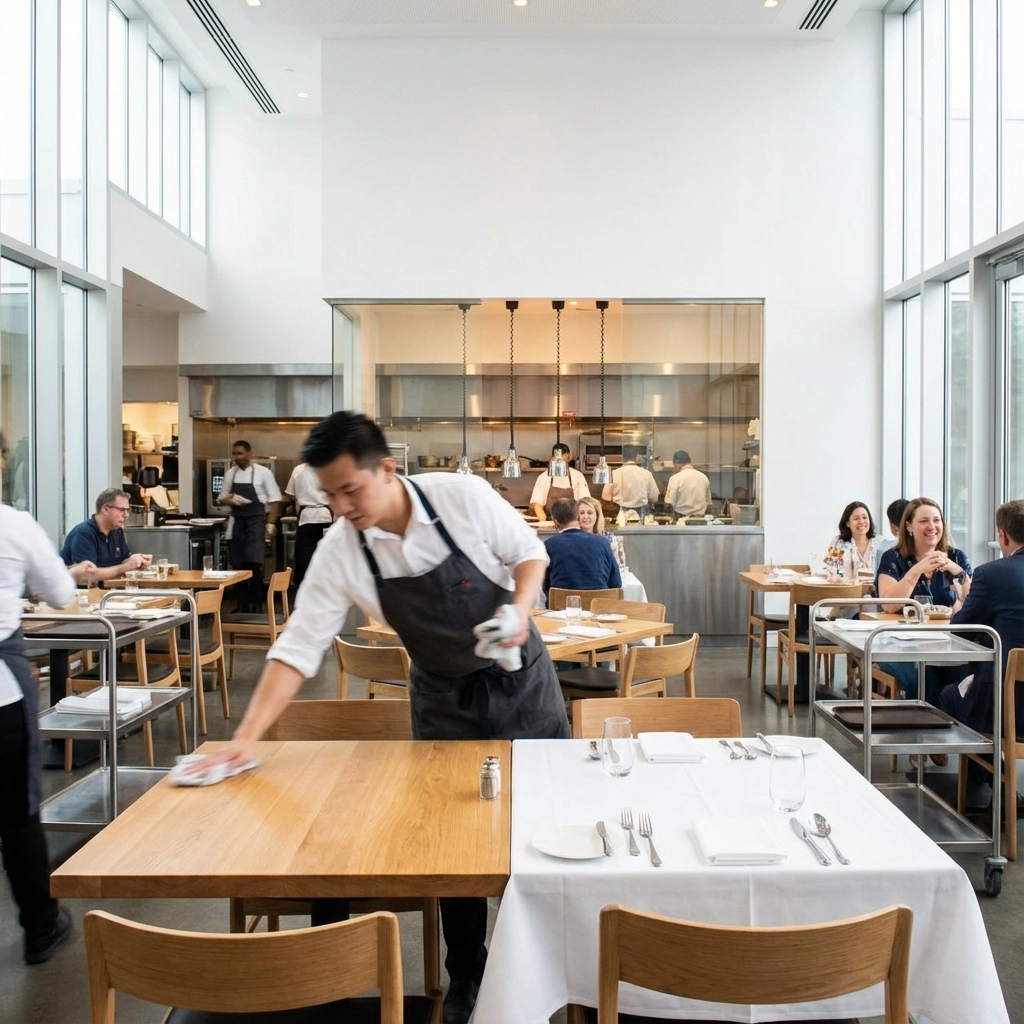
The most successful restaurants understand that their host station orchestrates the entire dining experience. When restaurant startup consulting clients ask about front-of-house optimization, we always start with flow management rather than speed optimization.
When Efficiency Becomes the Enemy
This principle extends beyond just table management. In restaurant operations, there are countless areas where apparent efficiency actually undermines your core objectives. Fast casual concepts often struggle with this when they prioritize take out vs delivery speed over order accuracy.
The key insight for any restaurant owner is recognizing when your efficiency measures conflict with your guest experience goals. Are you optimizing for internal convenience or customer satisfaction? The answer should always lean toward the latter.
Building Systems That Scale
As your restaurant grows, these strategic inefficiencies become even more critical. A single location might recover from batch seating chaos through individual heroics, but multi-unit operations need predictable systems that work regardless of staff experience levels.
Smart restaurant consulting focuses on creating sustainable operational rhythms rather than unsustainable bursts of activity. The restaurants that thrive long-term understand that consistency beats intensity every time.
The Bottom Line
Your hostess stand sets the tone for everything that follows. When you prioritize flow over speed, you create conditions where every other department can excel. Your servers provide better service, your kitchen maintains quality, and your guests leave with the kind of experience that generates return visits and referrals.
The next time you’re tempted to speed up your seating process, remember: the goal isn’t to fill tables quickly: it’s to create exceptional experiences consistently. Sometimes the best way to be truly efficient is to embrace strategic inefficiency at exactly the right moments.
This counterintuitive approach to restaurant operations separates successful concepts from struggling ones. The question isn’t whether you can afford to implement strategic seating( it’s whether you can afford not to.)
Contact Salt & Cayenne and we’ll help you become more profitable by managing your operations efficiency.
Get More Info
or fill out this form and we’ll be in touch soon!